When you are launching a new home care agency or replacing an outdated website, you face three very different paths: buying a pre-made template, using an AI website builder, or hiring a web designer who specializes exclusively in home care.
On the surface, all three options promise a "modern, professional website." The difference shows up three months after launch—when you check your phone logs and realize your site looks fine, yet families are calling your competitors and caregivers are abandoning your application page.
If you are weighing your options and trying to figure out where your marketing budget actually belongs, here is an honest breakdown of how templates, AI builders, and specialized home care web design compare in the real world.
Option 1: Pre-Made Website Templates (DIY or Generalist Freelancers)
Template marketplaces are packed with thousands of healthcare and senior-care themes that cost anywhere from $60 to a few hundred dollars—or a couple thousand if you hire a generalist freelancer to plug your logo and text into one.
Where Templates Work Well
- Low upfront cost: If you are bootstrapping a brand-new agency before your state license is even approved, a basic template gets a placeholder web address online quickly.
- Predictable structure: You can see the demo layout before you buy it, so there are fewer visual surprises during setup.
Where Templates Fall Short for Home Care
- Built for medical clinics, not home care: Most "senior care" templates are actually built for nursing homes, assisted living facilities, or medical practices. They feature stock photos of stethoscopes and hospital beds—the exact opposite of the warm, non-medical in-home reassurance families want.
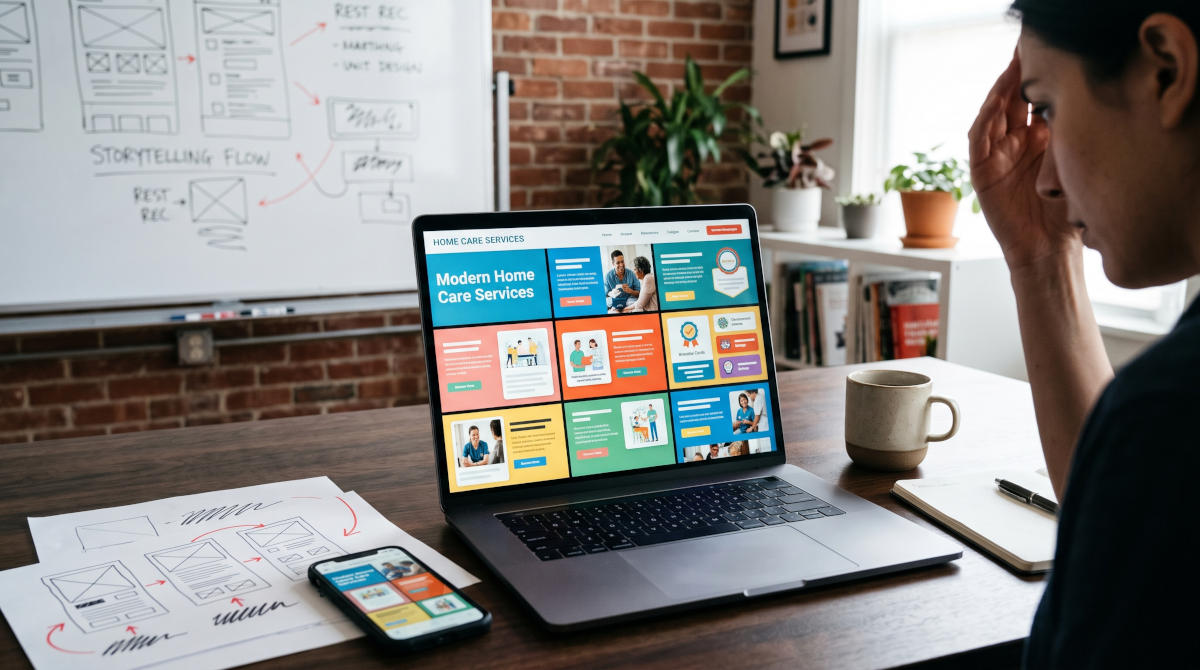
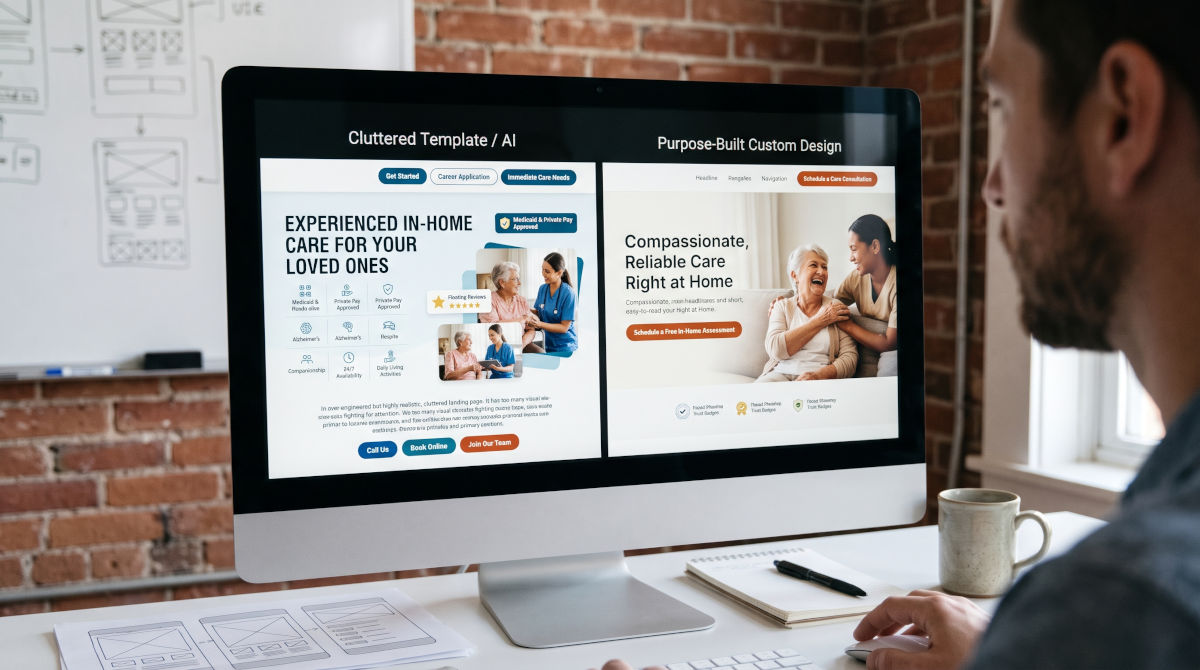
- Overloaded "Brady Bunch" layouts: Theme developers cram dozens of staggered boxes, sliders, and overlapping widgets into demos so the template looks flashy. When you drop real home care copy into those boxes, visitors end up overwhelmed instead of reassured.
- Zero conversion strategy for two audiences: A home care website has to convert two completely different visitors simultaneously—stressed adult children looking for care and job-seeking caregivers applying on their phones. Generic templates treat hiring as an afterthought buried in the footer.
Option 2: AI Website Builders
AI website generators have exploded in popularity because they can spin up a multi-page website with placeholder text and stock imagery in under ten minutes.
Where AI Builders Work Well
- Speed for rough drafts: AI tools are handy for brainstorming early page outlines or testing color palettes before you invest in a real build.
- Basic mobile responsiveness: Most modern AI builders automatically stack sections cleanly enough for a simple brochure site.
Where AI Builders Fall Short for Home Care
- Generic, robotic messaging: AI writes copy that sounds like every other agency on the internet ("Compassionate, personalized care tailored to your loved one's unique needs"). Families comparing three local agencies on Google immediately tune out generic buzzwords.
- Subtle compliance and terminology mistakes: AI frequently confuses non-medical home care with skilled home health, or generates intake forms that ask for protected health information without proper security or HIPAA-compliant routing.
- No local SEO architecture: Ranking in neighboring towns requires thoughtfully structured service-area pages and local trust signals. AI builders typically spit out thin, repetitive pages that struggle to rank on Google.
Option 3: Experienced Home Care Web Design Specialists
Working with a web design partner dedicated exclusively to the home care industry means your site is engineered from the ground up around how families search, evaluate trust, and book in-home assessments.
Where Specialist Design Works Best
- Industry-specific conversion flow: Every section is paced to calm an anxious family member, answer their immediate questions about safety and reliability, and guide them naturally toward a phone call or care consultation.
- Dedicated caregiver recruiting funnels: Instead of hiding job openings, a home care specialist builds fast, mobile-friendly caregiver application paths designed to capture applicants between shifts.
- Built-in local SEO foundation: Your core service pages (dementia care, respite care, 24-hour care) and city pages are structured cleanly so Google understands exactly where you operate and what families you serve.
The Trade-Off
- Higher upfront investment than DIY: Custom, industry-specific design costs more than a $79 template or a monthly AI subscription—though for most agencies, landing just one or two private-pay clients pays for the entire website.
Side-by-Side Comparison: Which Option Fits Your Agency?
| Factor | DIY Templates | AI Builders | Home Care Specialist |
|---|---|---|---|
| Upfront Cost | Low ($60–$1,500) | Low ($20–$50/month) | Moderate to Custom Investment |
| Home Care Positioning | Often feels overly clinical or generic. | Cookie-cutter copy that blends in with competitors. | Tailored specifically to private-pay families and local trust. |
| Caregiver Recruiting | Usually a basic contact form or buried footer link. | Generic careers block with weak mobile flow. | Dedicated, mobile-first caregiver application funnel. |
| Local SEO Readiness | Requires manual restructuring and heavy cleanup. | Weak site hierarchy and thin location pages. | Clean service and city-page architecture built to rank. |
| Your Time Required | High—you end up writing, formatting, and troubleshooting. | Moderate—fast start, but endless tweaking to fix generic copy. | Low—guided process handled by industry experts. |
The Real Question: What Is a Missed Client Worth?
A template or AI builder makes sense if you simply need a digital business card while waiting on state licensing paperwork. Once your doors are open, however, your website is your primary trust engine.
In home care, a single private-pay client often represents thousands of dollars in monthly recurring revenue. If a confusing template or generic AI site causes even two families a month to hit the "Back" button and call a competitor down the street, the "cheaper" website quickly becomes the most expensive decision in your business.
Ready to Build a Website That Wins More Care Consultations?
At HomeCareWebs.com, we design and build custom websites exclusively for home care agencies—combining calm, high-converting layouts with clear local SEO and caregiver recruiting funnels.
Contact us today for a free website consultation, and let’s talk about turning your agency’s online presence into your most reliable source of private-pay leads.